Readiness & PII Data Mapping
We analyze your current data flows, third-party sharing agreements, and consent mechanisms against ISO 27701 clauses, identifying critical privacy gaps and mapping out a precise organizational remediation strategy.
At SurkshaNow, we help organizations accelerate their data privacy and regulatory compliance standards. By extending your ISO 27001 security foundation with the ISO/IEC 27701:2019 Privacy Information Management System (PIMS) framework, we ensure your Personally Identifiable Information (PII) processing is secure, audit-ready, and fully aligned with global laws like GDPR, HIPAA, and India's DPDP Act 2023.
Navigating the fragmented landscape of global privacy laws can be complex. SurkshaNow simplifies your PIMS certification journey's handling everything from initial PII data mapping to Record of Processing Activities (RoPA) development, internal privacy audits, and independent registrar Stage 1 and Stage 2 certification reviews.
Our compliance specialists possess extensive experience across the Indian DPDP Act 2023, EU GDPR, HIPAA, and ISO standards, ensuring your privacy controls meet strict international and local statutory expectations.
We build your PIMS Management System package, prepare data flow maps, and create reusable process artifacts to eliminate friction during external assessment phases.
We work directly alongside accredited Certification Bodies (Registrars) to streamline objective evidence collection, management reviews, and privacy audit simulations, accelerating your time-to-certification.
We extend privacy beyond basic policies. Our modern approach natively integrates verifiable consent management frameworks (like your ConsentiQo platform), ensuring transparent data subject rights (DSR) workflows.
Whether you operate as a PII Controller or a PII Processor, we design a customized remediation roadmap tailored precisely to your specific legal obligations and operational style.
Post-certification, we manage your internal privacy review compliance, data breach notification protocols, and surveillance audit preparation to sustain your compliant status permanently.
We guide your organization through a transparent, structured process to achieve and maintain your formal ISO/IEC 27701:2019 certification.
We analyze your current data flows, third-party sharing agreements, and consent mechanisms against ISO 27701 clauses, identifying critical privacy gaps and mapping out a precise organizational remediation strategy.
We author and refine your comprehensive Privacy Manual, core data protection policies, and your detailed Record of Processing Activities (RoPA) utilizing proven, audit-ready templates.
Our team manages coordination across departments, helping you establish Data Subject Rights (DSR) response workflows, execute mandatory employee privacy training, and build out Data Protection Impact Assessments (DPIAs).
We conduct mandatory internal privacy audits, facilitate your formal Management Review meetings, and compile the objective consent and access evidence logs required before the registrar audit.
We guide you seamlessly through Stage 1 (Documentation Review) and Stage 2 (On-site Implementation Review) audits conducted by your independent, accredited Certification Body.
We help your team manage privacy non-conformances, track breach incident indicators (KPIs), and establish continuous monitoring dashboards for hassle-free annual surveillance assessments.
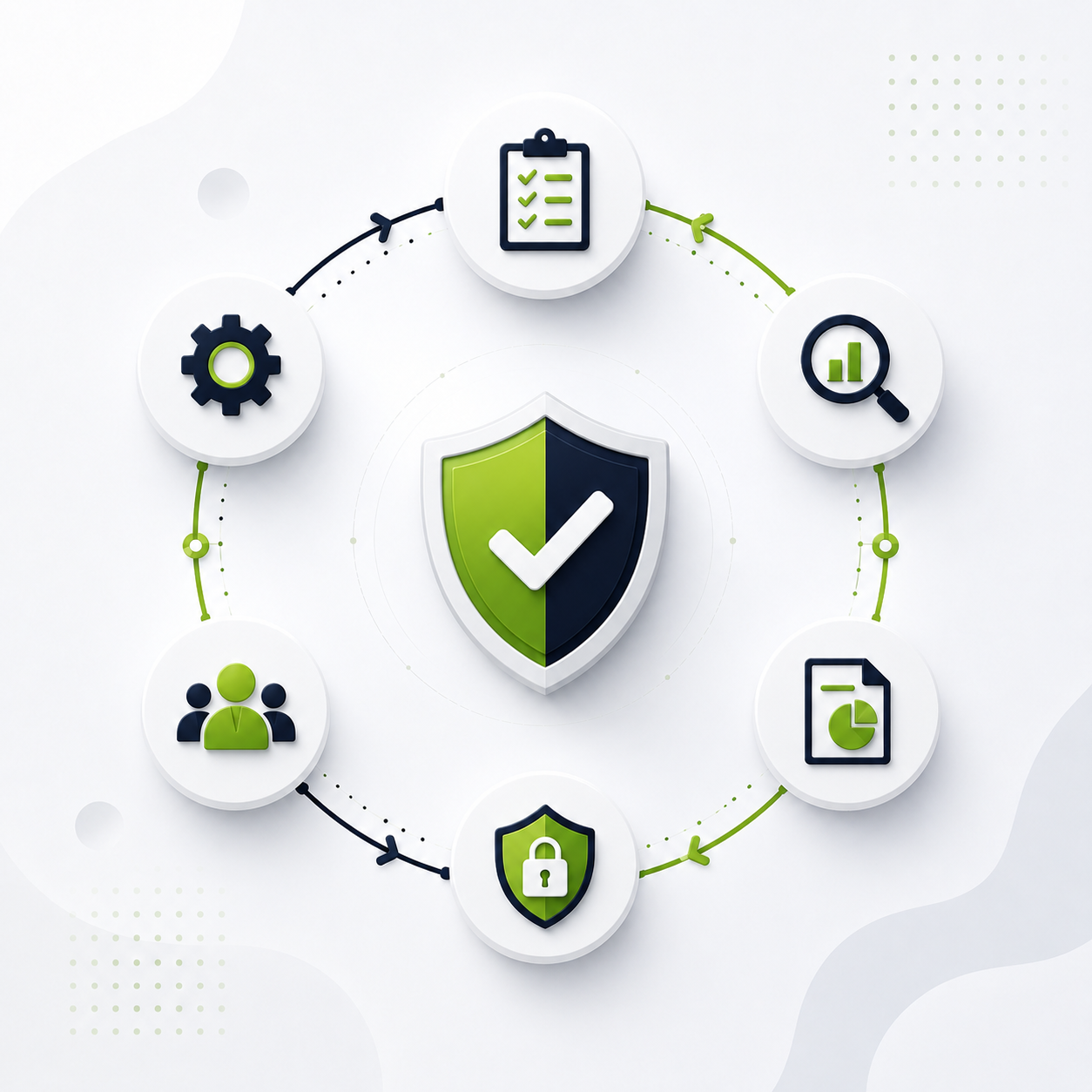
ISO 27701 builds upon your existing ISMS by adding specific requirements based on whether your organization controls the data or merely processes it for a client.
|
Core Role / Principle |
Strategic Objective |
PIMS Implementation Profile |
|
PII Controller Controls |
Govern how and why data is collected directly from individuals. |
Establishes legal basis, transparent privacy notices, verifiable consent collection, and privacy-by-design architecture. |
|
PII Processor Controls |
Securely process data strictly on behalf of a Controller client. |
Implements stringent customer data processing agreements (DPAs), secure sub-processor tracking, and strict data return/deletion protocols. |
|
Privacy by Design |
Embed privacy into IT systems and product lifecycles from day one. |
Default configurations ensure strict data minimization, proactive pseudonymization, and end-to-end encryption. |
|
Data Subject Rights (DSR) |
Empower individuals to control their personal data actively. |
Workflows manage verifiable requests for data access, erasure, correction, and automated consent withdrawal. |
Align your consent architecture and data fiduciary responsibilities with Indias Digital Personal Data Protection Act.
Navigate the complexities of the EU General Data Protection Regulation and cross-border data transfer mechanisms.
Build the foundational Information Security Management System (ISMS) required before adopting the ISO 27701 privacy extension.
Yes. ISO/IEC 27701 is designed as a direct privacy extension to the ISO/IEC 27001 standard. You must either already hold an active ISO 27001 certification or choose to implement and audit both standards simultaneously during a combined assessment project.
(UX Update) ISO 27701 serves as a globally recognized, agnostic framework that maps directly to major privacy laws. By implementing its controls—such as verifiable consent management, DSR fulfillment, and strict data minimization—you inherently build the operational mechanisms required to satisfy both the EU GDPR and the Indian DPDP Act 2023 simultaneously.
The RoPA is a foundational privacy document required by both ISO 27701 and GDPR. It serves as a comprehensive inventory detailing exactly what PII you collect, why you collect it, where it is stored, who it is shared with, and when it will be securely deleted.
(UX Update) For organizations acting as PII Controllers, the standard mandates clear, demonstrable proof of user consent before processing data. SurkshaNow helps you integrate these requirements with automated Consent Management Platforms (CMPs) like ConsentiQo, ensuring your digital properties automatically sync user preferences with your backend PIMS framework.
A comprehensive certification-ready package consists of the PIMS Manual, your RoPA, Data Protection Impact Assessments (DPIAs), Data Processing Agreements (DPAs) for vendors, internal audit files, past Management Review minutes, and DSR fulfillment logs.
The external audit involves deep structural and operational evaluation. Registrars perform comprehensive document analysis during Stage 1 to verify your privacy policies. During Stage 2, they execute system configuration verification, review consent logs, and interview your Data Protection Officer (DPO) and privacy practitioners to confirm those rules are lived out in daily operations.
The Privacy Information Management System belongs entirely to your business and must be integrated into daily operations by your compliance and IT teams. However, because drafting precise RoPAs and DPIAs can be highly taxing, companies leverage specialists like SurkshaNow to architect, organize, and write the documentation to clear external evaluations seamlessly.
It depends on your business model. If you determine the purpose of the data collection (e.g., a B2C eCommerce brand), you are audited against Controller controls. If you provide B2B software hosting data for your clients, you are audited against Processor controls. Many modern SaaS companies are audited against both sets of controls simultaneously.
Stage 1 is a structural readiness assessment where the registrar assesses your written privacy manual, RoPA, and legal registers. Stage 2 is the comprehensive implementation assessment where the registrar inspects your live data bases, consent workflows, and interviews teams to verify whether your operations are genuinely practicing the written privacy rules.
Yes. ISO 27701 strictly mandates that organizations execute separate, independent internal audits at planned intervals. Even with a dedicated Data Protection Officer, internal audits provide a qualitative, systematic, and unbiased review of your privacy frameworks overall effectiveness and operational legal safety.